Stiamo completando l’audit legale della piattaforma.
Ichnos non è ancora aperto e non vende nulla.
ARTHEIA S.R.L.Startup innovativa dal 5 ottobre 2026
Che cosa accompagna un’opera nel tempo?
Documenti sparsi, in mani diverse.
L’opera resta.
La sua documentazione dovrebbe restare con lei.
Una foto.Resta nel telefono.
Una lettera.Si perde.
Una fattura.Va in un cassetto.
Un catalogo.Va fuori stampa.
Una vendita.Non si annota.
Un archivio.Chiude.
Tre momenti in cui il modo di conoscere un’opera ha fallito.
Ogni epoca ha prodotto un metodo. Ogni metodo ha lasciato qualcosa dietro di sé.
Sala ILa copia
Sala IILa bottega
Sala IIIIl comitato
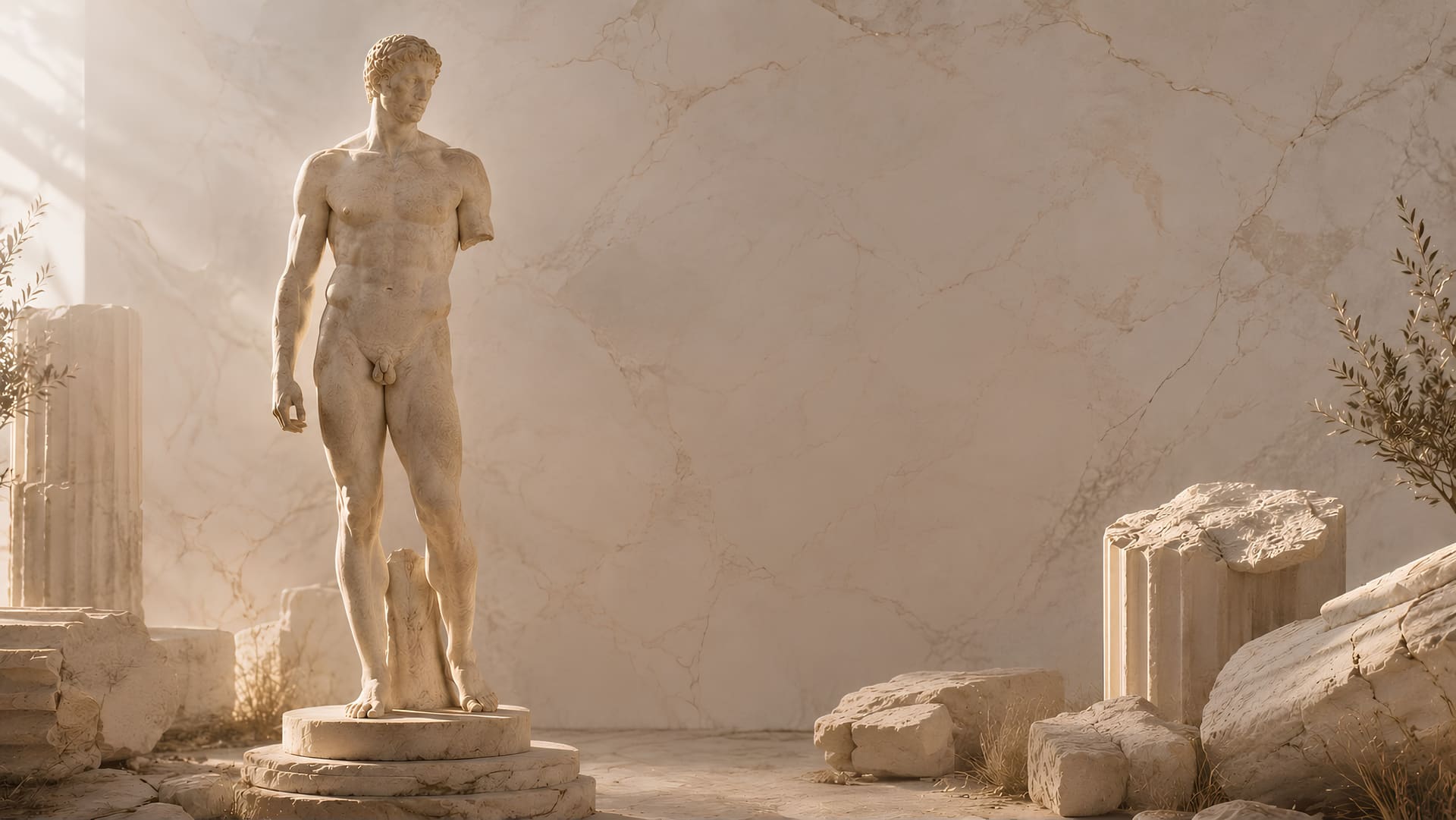
Copia in marmo da un bronzo greco. Studio renderizzato. Non documenta un’opera specifica.
Età imperiale romanaDa originali greci
Il primo fallimento
L’originale scompare.
La copia sopravvive all’originale
La scultura greca in bronzo valeva più fusa che conservata. Quasi tutta è andata, e ciò che ci arriva sono copie in marmo tagliate secoli dopo, in un altro paese, da mani che nessuno ha registrato.
L’oggetto sopravvive. L’originale no.
È uno dei grandi paradossi della storia dell’arte: di molta scultura greca conosciamo l’originale solo attraverso le sue riproduzioni. L’oggetto nella sala è reale. Ciò di cui è prova non c’è più.
L’oggettoStudio renderizzato da copie romane in marmo di bronzi greci. Non documenta un’opera specifica.
FonteGran parte di ciò che sappiamo della scultura greca in bronzo sopravvive solo in copie romane in marmo. I bronzi furono rifusi per il metallo.
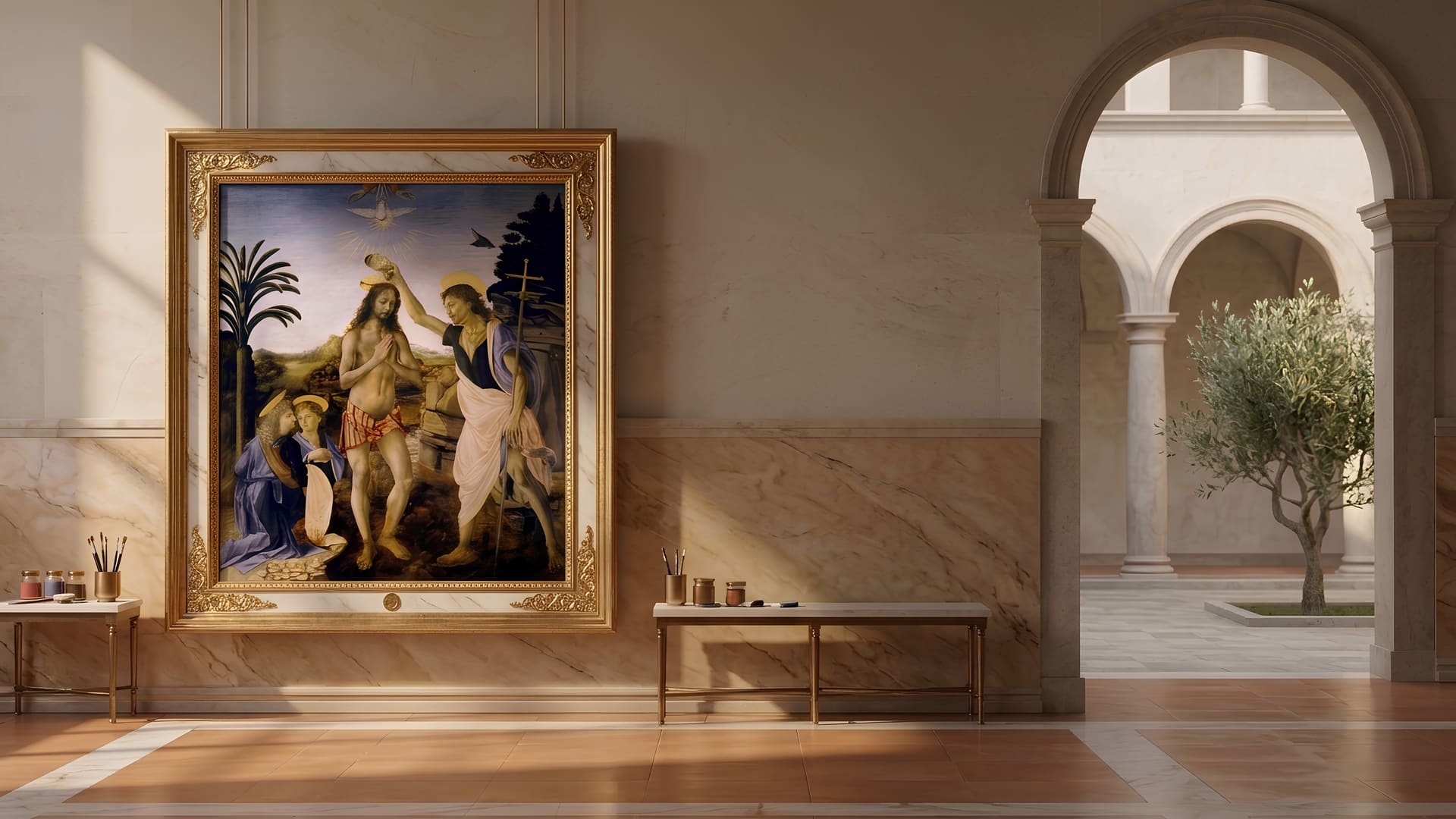
Il Battesimo di Cristo. c. 1470 a 1475. Olio e tempera su tavola. Verrocchio e bottega.
c. 1470Firenze
Il secondo fallimento
L’autore diventa incerto.
Il Battesimo di Cristo
La bottega del Verrocchio non era uno studio solitario. Molte mani potevano lavorare sotto il nome di un solo maestro.
L’opera sopravvive. La paternità diventa una questione di opinione.
L’attribuzione smette così di essere una domanda con una sola risposta. Non chi l’ha fatta, ma quanto ne ha fatto ciascuno, e chi ha il diritto di deciderlo.
FonteGli Uffizi assegnano l’opera ad Andrea del Verrocchio e Leonardo da Vinci, riconoscendo la mano di Leonardo nell’angelo di sinistra e la collaborazione di altri.
OperaIl Battesimo di Cristo. c. 1470 a 1475. Olio e tempera su tavola. Verrocchio e bottega.
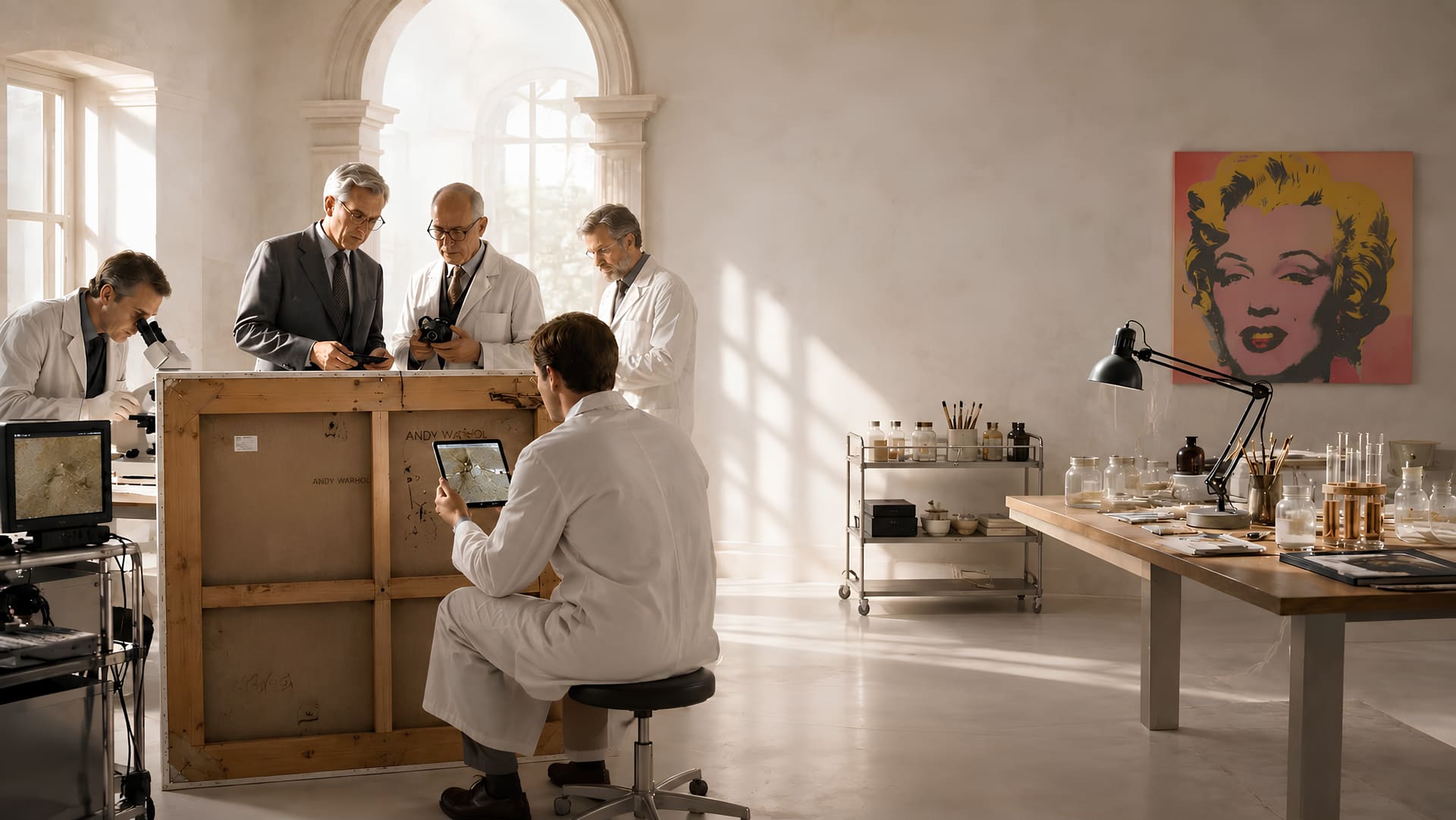
Esame tecnico. Studio diagnostico di un’opera di attribuzione contestata.
1995 a 2011New York
Il terzo fallimento
Il giudizio diventa insostenibile.
Il Warhol Authentication Board
La produzione industriale era entrata nello studio. Assistenti, stampatori, acetati, serigrafie ed edizioni resero difficilissima una domanda semplice: dove finisce l’artista e dove comincia l’opera.
Il mercato è cresciuto. Il giudizio non ha più potuto reggerne il peso.
Il problema non era più riconoscere un falso. Era definire la paternità.
FonteLa Andy Warhol Foundation istituì il Board nel 1995 per esaminare le opere attribuite a Warhol. Nel 2011 ne fu autorizzata la chiusura.
OperaEsame tecnico. Studio diagnostico di un’opera di attribuzione contestata.
2026
Identità, non giudizio.
L’opera resta fisica.
La sua identità diventa persistente.
Un’identità documentata, stabilita alla fonte e resa accessibile in digitale, all’istante.
Dall’artista.Per l’opera.Per ogni futuro collezionista.
Un’opera lascia una traccia.
Ichnos, in greco, è la traccia. La raccogliamo alla fonte e la teniamo con l’opera.
In sviluppo
La traccia dell’opera.
Documentazione digitale dell’opera, stabilita alla fonte. Raccoglie in vita la dichiarazione di paternità dell’artista e la tiene unita all’opera nel tempo, insieme alla sua storia. Documenta la dichiarazione: non è una perizia di autenticità.
EsempioAperta con la scheda IchnosStudio della cavaArtista d’esempioTecnicaOlio su telaAnno2026CodiceW4A9F2C1B7E3
EsempioCodice del documentoW4A9F2C1B7E3Apri la scheda
EsempioAperta con il codiceStudio della cavaArtista d’esempioCodiceW4A9F2C1B7E3Data12 marzo 2026Scheda ridotta: la documentazione esiste ed è valida. Quella completa si apre solo con la scheda Ichnos.
Dove siamo.
2026Ricerca e prototipo: la piattaforma Ichnos e la scheda NFC.
25 settembre 2026Nasce ARTHEIA S.R.L.
5 ottobre 2026ARTHEIA è riconosciuta startup innovativa.
OggiCompletiamo l’audit legale e raccogliamo le lettere di interesse degli artisti.
Dopo l’auditIchnos apre ai primi artisti.
Sei un artista?Entra per primo in Ichnos.
Stiamo raccogliendo le lettere di manifestazione di interesse degli artisti che vogliono documentare le proprie opere con Ichnos. Firmandola entri nella lista d’attesa, e ti scriviamo quando la piattaforma apre ai primi artisti.